
Jacket fitting guide
How should a suit jacket fit?
Judge a jacket through balance, comfort, movement and purpose, then let a tailor assess what should change.
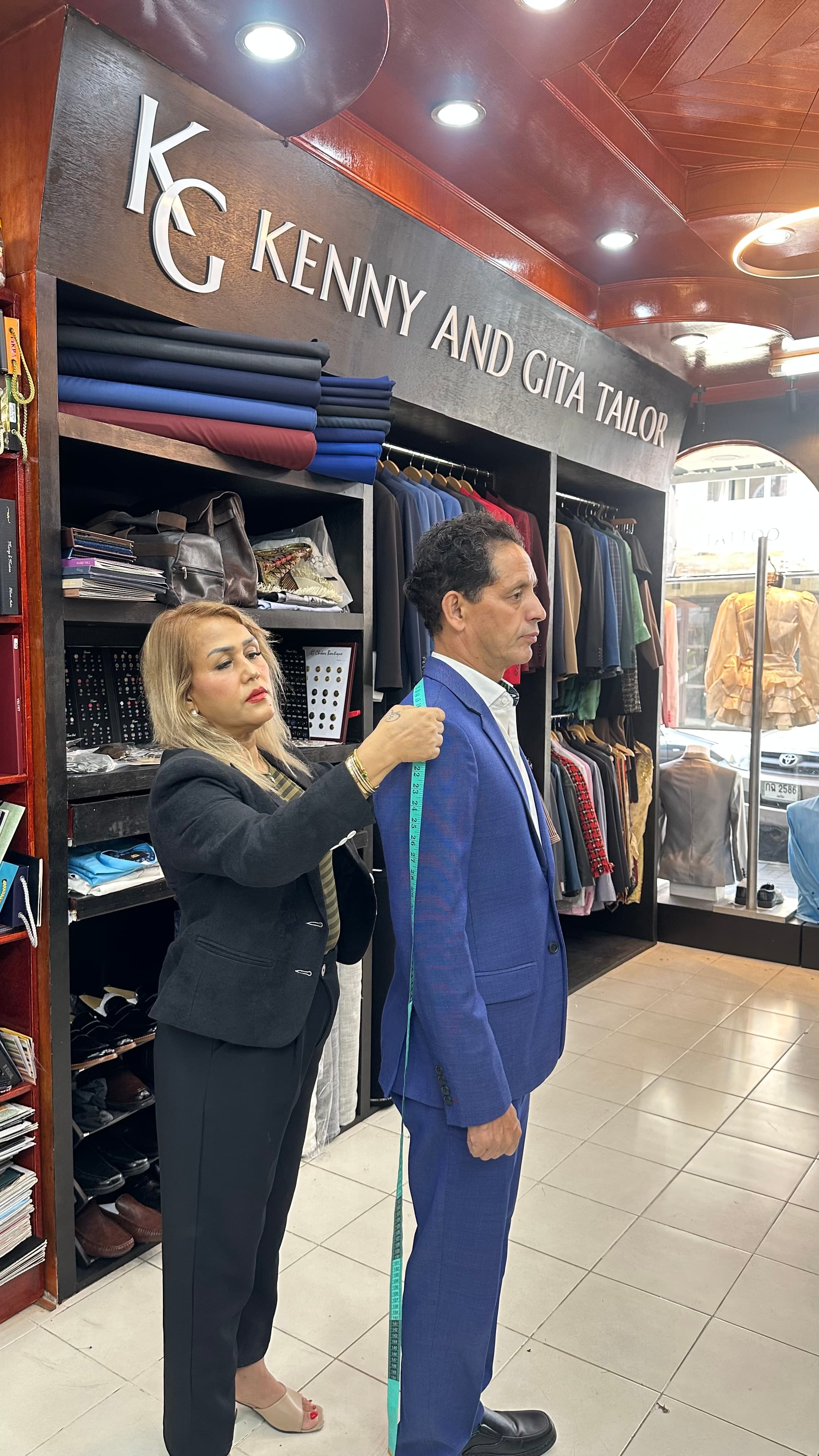
Start with the whole jacket.
A suit jacket should feel balanced when you stand naturally, comfortable when you sit and move, and appropriate for the way you plan to wear it. The fitting is not a hunt for one universal rule. It is a conversation about what you notice, what the jacket is for and what a tailor can responsibly assess in person.
A fitting becomes more useful when four related questions are considered together:
- Balance
- Look at the whole jacket while standing naturally, rather than judging one detail in isolation.
- Comfort
- Notice pressure, pulling or restriction and describe exactly where you feel it.
- Movement
- Sit, walk and reach as you would when wearing the finished jacket.
- Purpose
- Judge the jacket with its real shirt, layers, occasion and wearing habits in mind.
Use the fitting like a wear test.
A useful observation is specific to your body, clothing and intended use. It does not need professional vocabulary.
Arrive dressed for the jacket
Wear or bring the type of shirt and any usual layers. A fitting in different clothing can answer the wrong question.
Stand without performing
Let your arms rest and use your normal posture. If the jacket only looks settled while you hold yourself differently, say so.
Move through real moments
Sit, walk and reach. Describe when the jacket begins to distract you instead of trying to name the technical cause.
State your priority
A formal ceremony, long workday and warm evening may lead to different preferences. Tell the fitter which moment matters most.
Describe the concern before naming the fix.
Four pieces of information give the fitter something concrete to assess:
- Where
- Point to the exact area you notice.
- When
- Say whether it appears while standing, sitting, walking or reaching.
- What
- Describe the sensation or visual concern without guessing at its cause.
- Priority
- Explain which use, movement or appearance matters most to you.
How that conversation fits a Phuket order.
Approximately three to five days for regular custom garments. Allow at least seven days in Phuket where possible.
- 01
Set the context before measurements
Kenny and Gita begin with the intended use, style preferences, garment choices and Phuket dates. Those decisions give the fitting a purpose.
- 02
Review the garment on the wearer
Most custom garments involve one or two fittings. Use them to show what you observe in a natural stance and in the movements that matter to you.
- 03
Confirm the next decision
The tailoring team must assess the cause, suitable response and available time. A concern does not automatically establish that a particular adjustment is possible.